
Putting Down the Shovel: Creative Hopelessness as a Bridge Between ACT and ERP
Most clinicians who treat OCD have encountered a case where the exposure and response prevention (ERP) plan looks solid, the client is engaged, and progress still stalls.
Sometimes the problem isn’t the exposure menu, the content of the exposure, or the amount of practice. Instead, the client’s goal of treatment may subtly be focused getting rid of anxiety, uncertainty, or unwanted thoughts.
Creative hopelessness, an ACT-informed process, can help address this gap. It offers a way to explore what the client has been trying to accomplish through control and whether those efforts are actually moving them toward the values-based life they want.
What Is Creative Hopelessness?
The term creative hopelessness can sound discouraging, particularly when working with clients who are already feeling overwhelmed by OCD. But the hopelessness isn’t about the person, their circumstances, or their future.
It is about recognizing that the struggle for control may be hopeless in its ability to produce the desired result.
In this sense, creative hopelessness can also be understood as a form of constructive surrender: a willingness to stop investing in strategies that aren’t working and make room for a different approach.
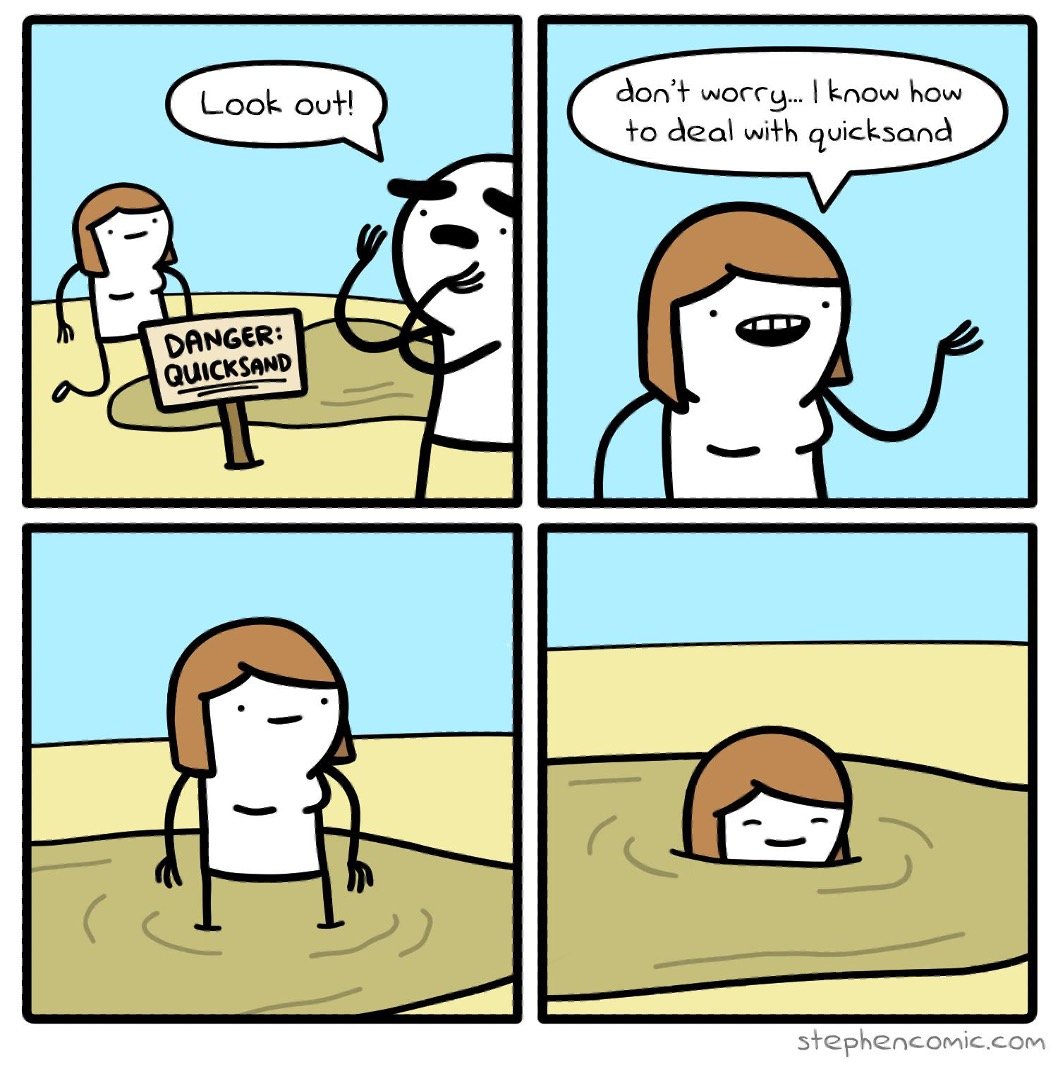
This starts with validating something deeply human: the automatic tendency to control difficult internal experiences is part of how our minds work. When anxiety, uncertainty, or intrusive thoughts feel threatening, it makes sense that we would try to make them stop. The problem isn’t that a client has been trying to cope. The problem is what happens when those strategies become increasingly costly and still fail to deliver the life the person wants.
The goal, then, is not to declare the client’s situation or life hopeless. It is to recognize the futility of the control agenda and begin creating space for willingness. Rather than asking, “How can I finally get rid of this?”, the client can begin exploring:
“What happens if I stop making the absence of this experience a requirement for living?”
That pivot is where creative hopelessness can become a bridge to ERP.
From Control to Willingness
Traditional problem-solving approaches generally focus on finding solutions or changing unwanted experiences. There are certainly problems we can solve. But thoughts, emotions, uncertainty, and internal experiences often don’t respond predictably to attempts to control them. Trying harder to suppress or eliminate them can sometimes make the struggle more intense.
Creative hopelessness invites a different question: What if the problem isn’t the presence of the difficult experience, but the struggle to control it?
This isn’t resignation, and it isn’t telling clients to tolerate suffering indefinitely or stop trying to change their circumstances. Instead, it involves recognizing that some aspects of internal experience cannot be reliably controlled and exploring what becomes possible when the struggle with them is reduced. Willingness is therefore offered as an active choice, not a demand. It means making room for discomfort in the service of freeing the client to move toward what matters.
For someone with OCD, that might mean allowing uncertainty to be present while engaging with their child, leaving the house without checking again, resisting reassurance while staying connected to a partner, or allowing an intrusive thought to exist without trying to determine what it means.
The goal isn’t to make those experiences feel okay. The goal is to make room for them without allowing them to dictate behavior.
Three Concepts That Work Together
Creative hopelessness can be organized around three closely related processes.
1. The Control Agenda
First, identify the client’s repertoire of attempts to control unwanted internal experiences.
For someone with OCD, this may include obvious compulsions such as checking, reassurance seeking, avoidance, and mental review. But the control agenda can be much broader:
· Trying to suppress intrusive thoughts
· Monitoring anxiety to determine whether an exposure is “working”
· Seeking certainty before making a decision
· Analyzing whether a thought is meaningful or dangerous
· Repeatedly checking how one feels
· Distracting from uncomfortable thoughts or sensations
· Using logic or information gathering to eliminate doubt
· Following increasingly rigid rules designed to prevent feared outcomes
Instead of focusing solely on what compulsions the client is performing in response to obsessions, you can consider the full range of ways in which the client has been trying to eliminate any unwanted internal experiences. This functional analysis can reveal that seemingly different behaviors serve the same purpose: reducing or controlling distress.
2. Workability Evaluation
Next comes the question of whether those strategies are actually working. This is not a debate about whether a strategy works at all. Many compulsions work in the short term. Checking can temporarily reduce doubt. Reassurance can produce relief. Avoidance can reduce anxiety. The question is whether these strategies are workable over time.
Are they helping the person build a meaningful life, or have they become part of the problem?
What happens after the reassurance wears off?
How much more checking is needed the next time?
Does certainty actually stay certain?
Has the person’s world become larger or smaller?
This is where creative hopelessness differs from simply telling a client to stop compulsions. The client is invited to discover the workability problem experientially.
3. The Cost of the Struggle
Finally, explore what the struggle itself has cost the client.
How much time is spent trying to get certainty?
How much energy goes into monitoring thoughts and feelings?
What relationships or activities have been affected?
What opportunities have been postponed until the person feels “ready”?
What would the client be doing if they weren't spending so much energy managing OCD?
The cost isn’t only symptom severity. It is the distance between the person’s current life and the life they want to be living. This is often where motivation begins to shift. Clients begin to think less about how they can get rid of OCD and more about what OCD is costing them, and what they would rather put their energy toward.
The Person in the Hole
The ACT metaphor of the person in the hole captures this process particularly well.
Imagine falling into a hole. You have a shovel, so you start digging. Digging feels productive. You are doing something about the problem. But the more you dig, the deeper the hole becomes.

The shovel represents the strategies we use to control unwanted internal experiences. In OCD, these might include rituals, reassurance seeking, avoidance, checking, mental review, analyzing, and attempts to achieve certainty.
The problem isn’t that the person has been trying to cope. Given the distress OCD creates, the strategies often make complete sense. The problem is that the strategies intended to get the person out of the hole may actually be making the hole larger.
The invitation is to put down the shovel and stop digging.
Putting down the shovel is not giving up on getting out of the hole. It is creating the possibility of finding a different way forward.
Clients may hear “stop trying to control your thoughts” as “stop caring,” “accept that something terrible might happen,” or “give up on getting better.”
Creative hopelessness offers something very different: Give up on the unworkable strategy, not on your life.
What Does This Look Like in OCD and ERP?
A client can complete exposures while still holding tightly to the control agenda. They may do the exposure with the underlying hope that anxiety will eventually disappear, certainty will arrive, or intrusive thoughts will lose their meaning. When that happens, ERP can inadvertently become another attempt at control.
The client may think:
“If I do this exposure correctly, my anxiety should go down.”
“If I can tolerate this long enough, I should eventually feel certain.”
“If I’m still anxious afterward, the exposure didn’t work.”
In this way, the exposure has become another shovel.
Creative hopelessness allows us to step back and examine the function of the behavior rather than focusing on the topography of the exposure.
ACT and ERP: Two Lenses, Not Two Opposing Approaches
Creative hopelessness can help clarify the function and purpose of ERP. A traditional CBT/ERP formulation might identify a compulsion, target the behavior through response prevention, and increase opportunities for learning through exposure. An ACT-informed formulation can add another layer of questions:
· What is the client trying to control?
· What does the client believe exposure is supposed to accomplish?
· Is the client using ERP to practice willingness or to achieve relief?
· What internal experience is the client unwilling to have?
· What is the cost of continuing to organize life around avoiding that experience?
· What would the client choose if anxiety and uncertainty did not have to be resolved first?
Building this recognition creates room for willingness. Rather than spending all of their energy trying to make internal discomfort disappear, clients can begin redirecting that energy toward engaging in relationships, activities, responsibilities, and experiences that matter to them.
Anchored Approach offers consultation for clinicians integrating ACT and ERP in the treatment of OCD and anxiety.