Where We’re Going
&
Where We’ve Been
Closing the Gap: Early Recognition and Support for Students with OCD
This introductory-level workshop will provide an overview of OCD as it affects youth, particularly in school. Presenters will provide research-based information on the nature, prevalence, impact, and cognitive-behavioral model of pediatric OCD. The workshop will also provide a primer in differential diagnosis and comorbidities of OCD along with the foundational principles and overview of the most scientifically supported psychotherapeutic intervention for OCD: exposure and response prevention (ERP).

Supporting Parents of Youth with OCD: An Acceptance and Commitment Therapy Approach for Clinicians and Families
Supporting Parents of Youth with OCD: An Acceptance and Commitment Therapy Approach for Clinicians and Families
This interactive workshop introduces Acceptance and Commitment Therapy (ACT) as an approach for supporting parents of youth with OCD, offering both an evidence-based clinical framework for practitioners and practical strategies parents can use at home.

New Hampshire Psychological Association
This interactive, 3-hour training will focus on identifying and reducing parental accommodation in the context of pediatric anxiety and OCD. It will equip clinicians with practical, evidence-based strategies to help families reduce these problematic patterns and provide more autonomy-supportive and resilience-building responses to their child’s anxiety and OCD symptoms.

OCD Walk
The OCD Walk brings together individuals impacted by OCD to connect, share stories, and make an impact. Each year, our community gathers to lift each other up and show those struggling on their road to recovery that they are not alone.
As one of the IOCDF's largest annual fund fundraisers, the OCD Walk is a vital way we show our advocacy and raise funds and awareness of this often misunderstood disorder.
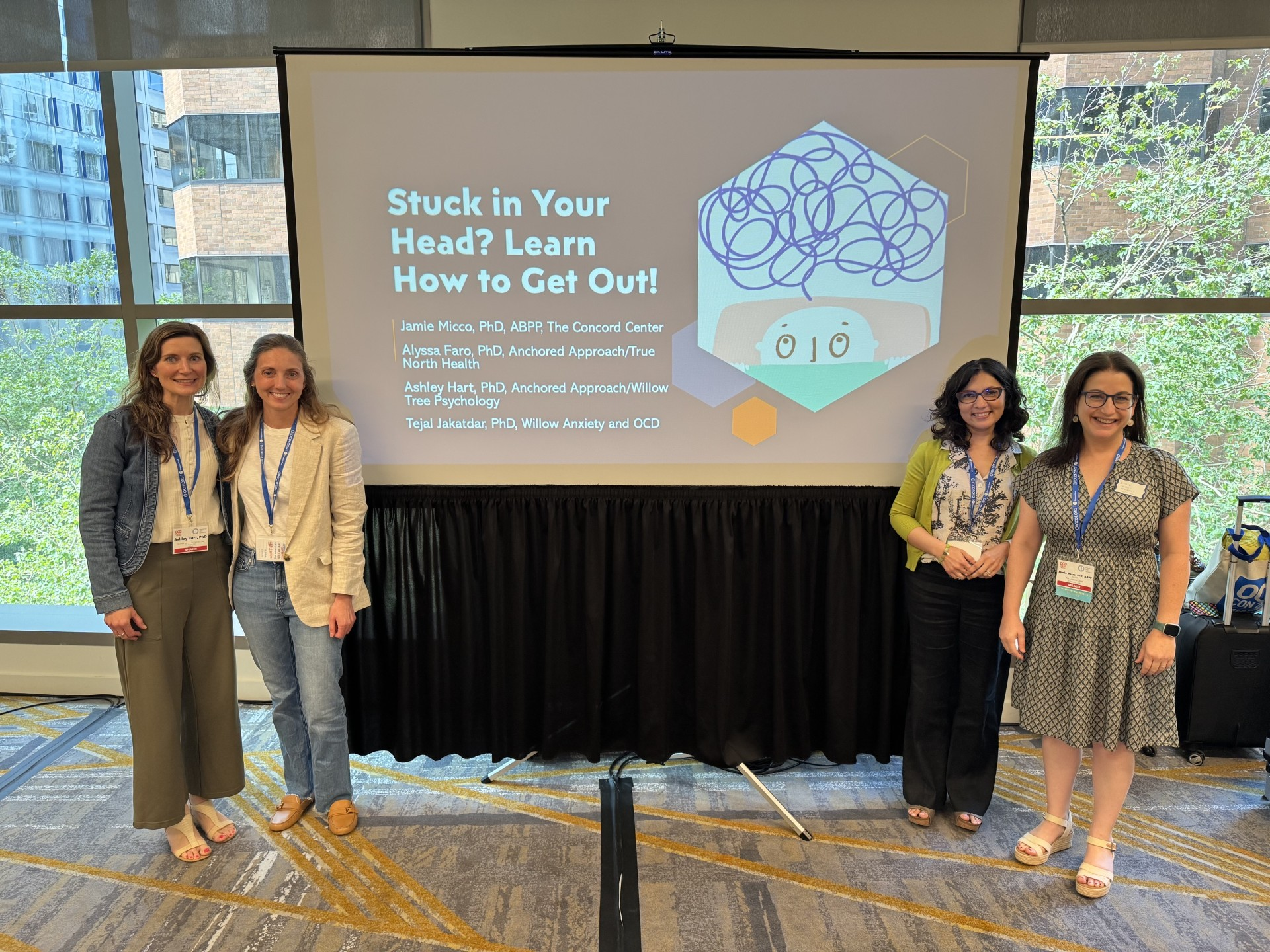
Stuck in Your Head? Learn How to Get Out!
Intrusive thoughts and images can seem loud and sticky, and they keep you from focusing on what is important to you. In this interactive workshop, we will practice a strategy called cognitive defusion, which helps you notice thoughts for what they are and step back from those that are unhelpful, rather than trying to push them away. We will present and demonstrate a menu of defusion exercises, beginning with basic options like thought labeling (for example, “I’m having the thought that something bad will happen if I don’t double check”). We will move to more creative options, like expressing thoughts using only emojis. Each participant will select their three favorite exercises and practice in small groups with a group leader.
But Will I Be OK? Using ERP to Address Reassurance-seeking Compulsions
Reassurance-seeking rituals in OCD are a common form of compulsive checking aimed at assuaging obsessive doubts. These rituals can be challenging for therapists, patients, and families, as they can be cloaked as seemingly benign behaviors. This session will distinguish between helpful information gathering and compulsive reassurance-seeking and teach ERP techniques to address the latter. As reassurance-seeking rituals manifest in many forms minimally captured by standard symptom checklists, various examples will be provided from across common thematic domains, including mental or memory-based, interpersonal, technology-facilitated, and subtle forms of reassurance-seeking compulsions. Using a functional analysis framework, this interactive session will have participants identify reassurance-seeking behaviors and build creative, targeted response prevention plans for these compulsions using a variety of strategies.

Supporting Parents to Step Back: ACT-Informed Approaches to Reducing Accommodation in Pediatric Anxiety and OCD
Interactive half-day workshop hosted by the Behavioral Health Services team at Franciscan Children’s in Brighton, MA.

Bringing Acceptance and Commitment Therapy Principles to Parents of Anxious Youth
This presentation will provide an overview of anxiety disorders and OCD in youth and the role of parents in the cognitive-behavioral treatment of these common and impairing conditions. It will begin with an overview of current scientific data on the efficacy and limitations of psychosocial treatments for pediatric anxiety disorders and OCD that are primarily or exclusively child-focused. Next, we will describe the core processes of Acceptance and Commitment Therapy (ACT), as well as why and how it has been adapted as an intervention for parents of youth with a variety of physical and mental health conditions, including anxiety disorders and OCD.


Introduction to Exposure and Response Prevention for Obsessive-Compulsive Disorder (OCD) in Youth.
Interactive workshop conducted at the New Hampshire Behavioral Health Summit in Manchester, NH.
Past collaborations
Here are just a few of our past hosts:
Assumption University, Binghamton University, Beth Israel Deaconess Medical Center, Franciscan Children’s, Harvard Medical School, Huntsman Mental Health Institute/University of Utah, International OCD Foundation, Mattapoisett Library, OCD Massachusetts, New Hampshire Behavioral Health Summit, New Hampshire Psychological Association, UMass Chan Medical School, University of Massachusetts Dartmouth.
Something Catch Your Eye?
Haven’t seen us live? Catch us in print.
-
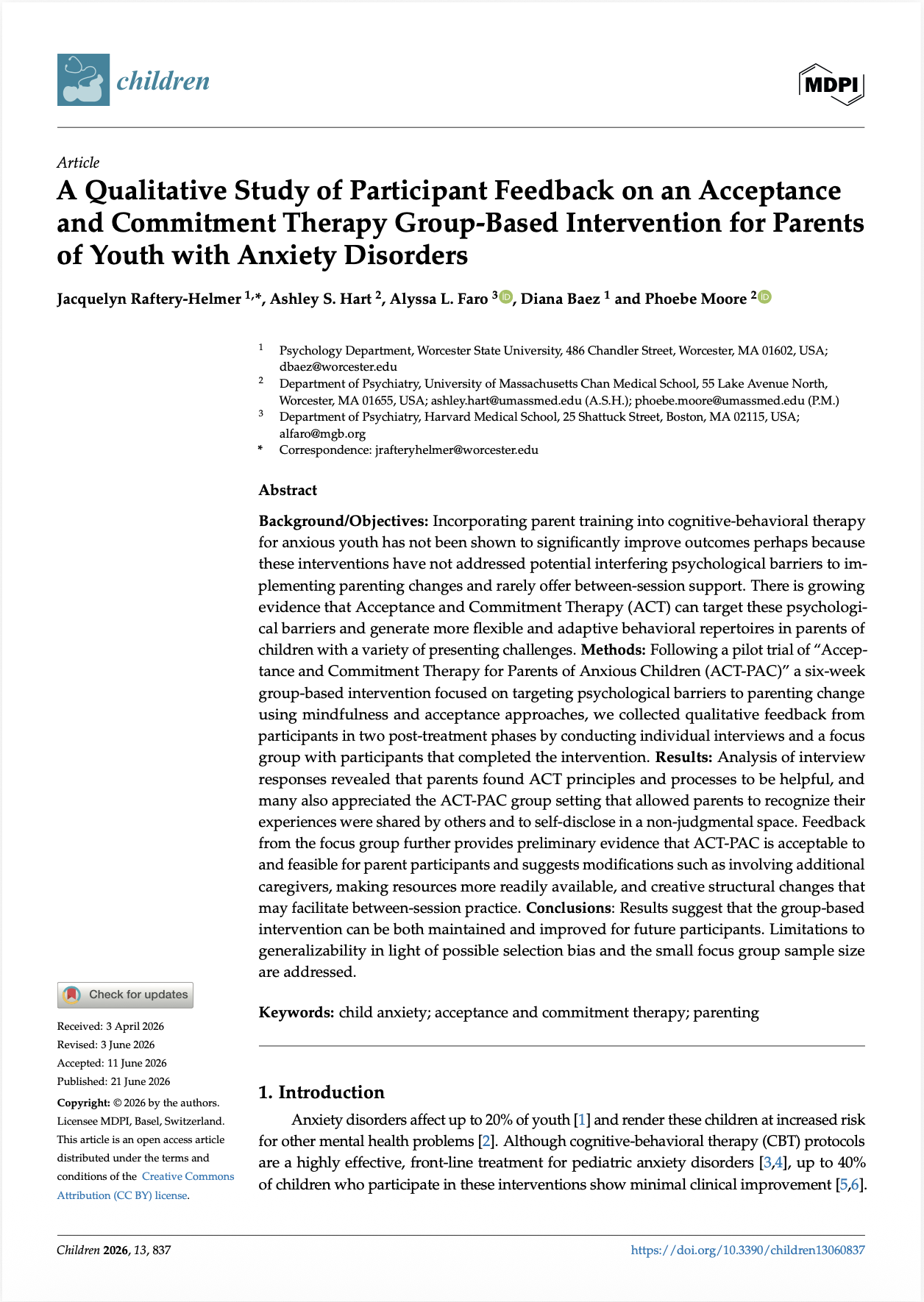
![Image of front page of manuscript on ACT protocol for Parents of Anxious KIds]()
A Qualitative Study of Participant Feedback on an Acceptance and Commitment Therapy Group-Based Intervention for Parents of Youth with Anxiety Disorders
-
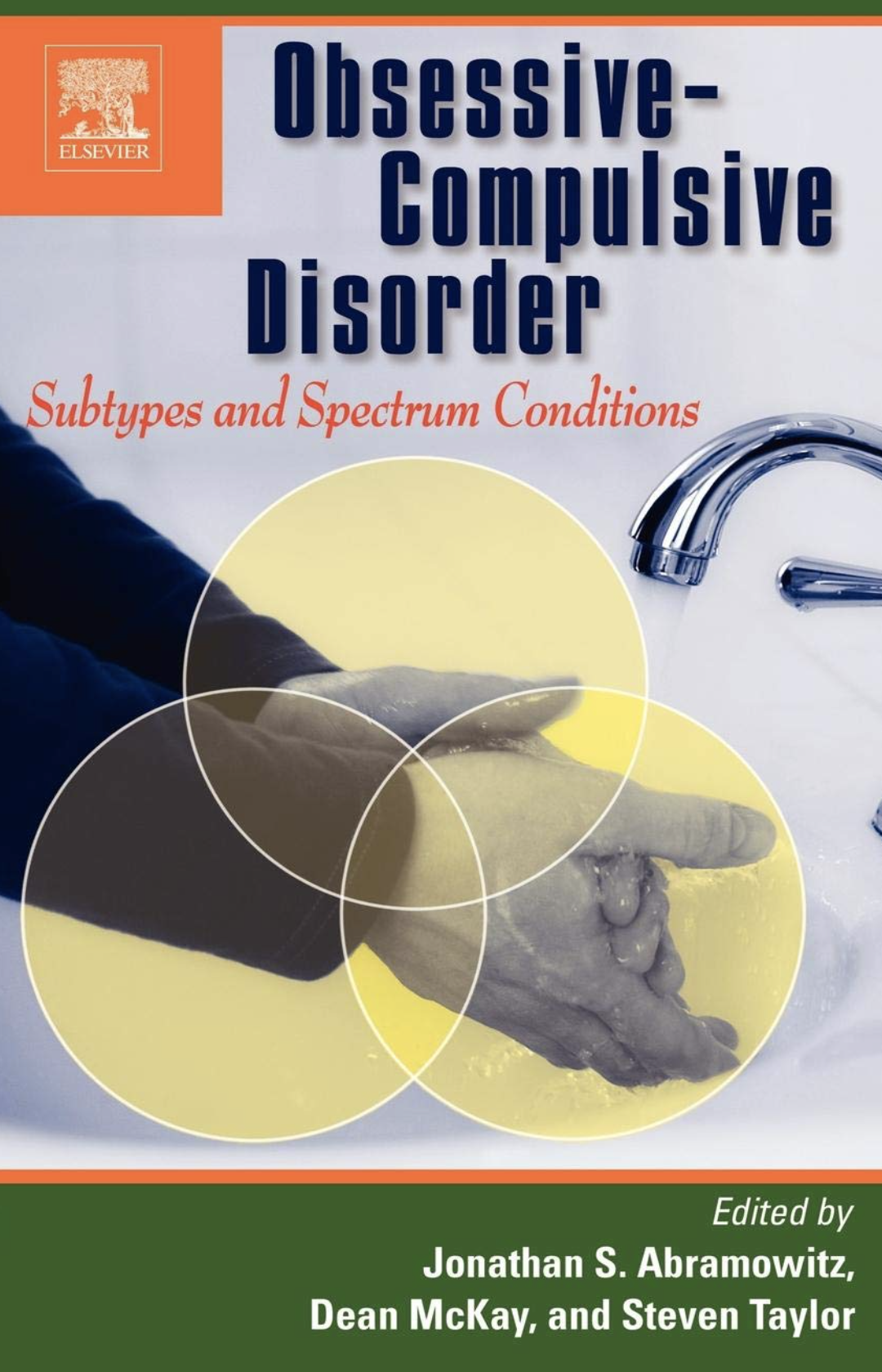
![Book cover titled 'Obsessive-Compulsive Disorder: Subtypes and Spectrum Conditions,' edited by Jonathan S. Abramowitz, Dean McKay, and Steven Taylor.]()
Symmetry, ordering, and arranging. In: Obsessive-compulsive disorder: Subtypes and spectrum conditions
-
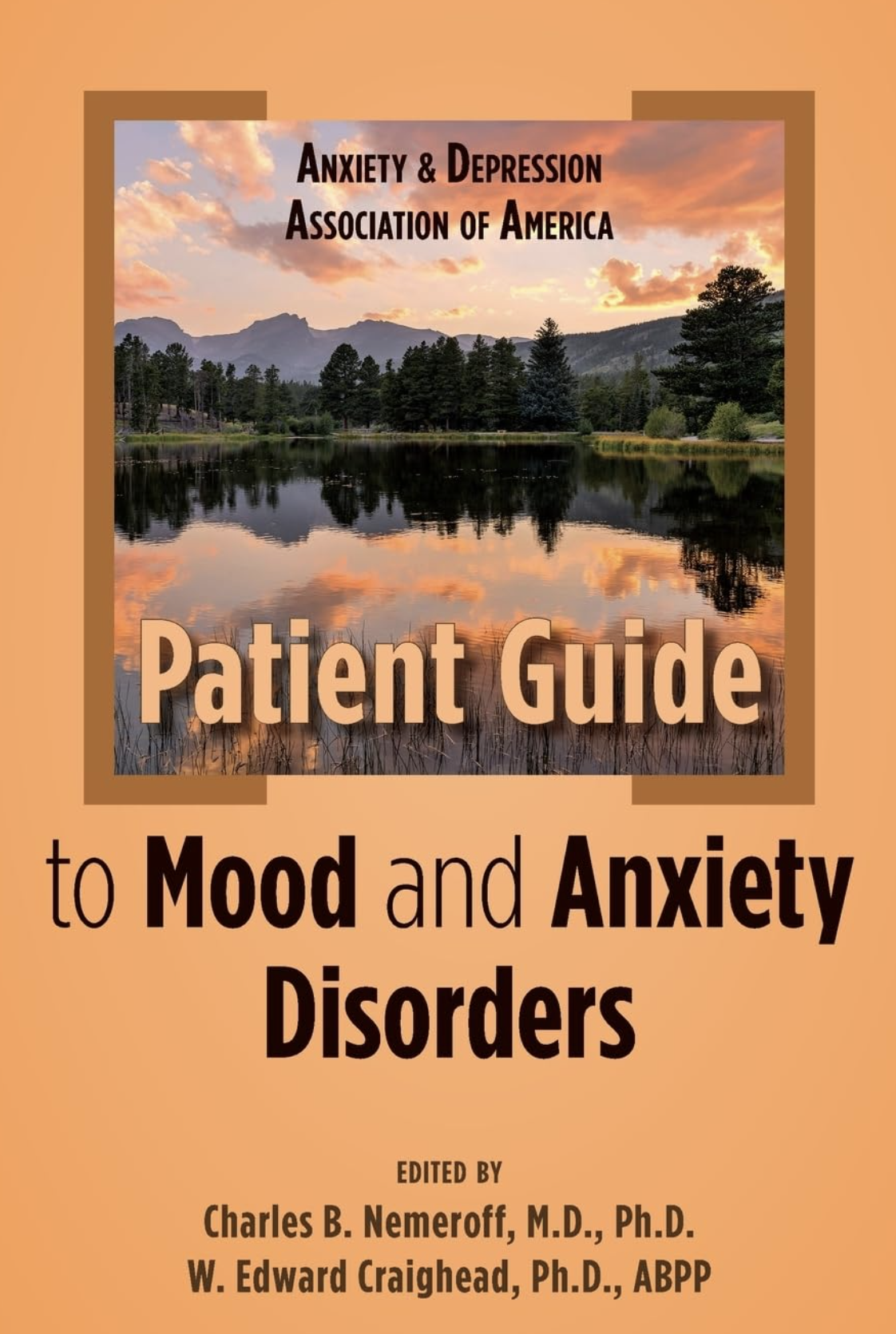
![Cover of a patient guidebook titled 'to Mood and Anxiety Disorders' by the Anxiety & Depression Association of America.]()
Exposure and Response Prevention for Obsessive-Compulsive Disorder. In: ADAA Patient Guide to Mood and Anxiety Disorders
-
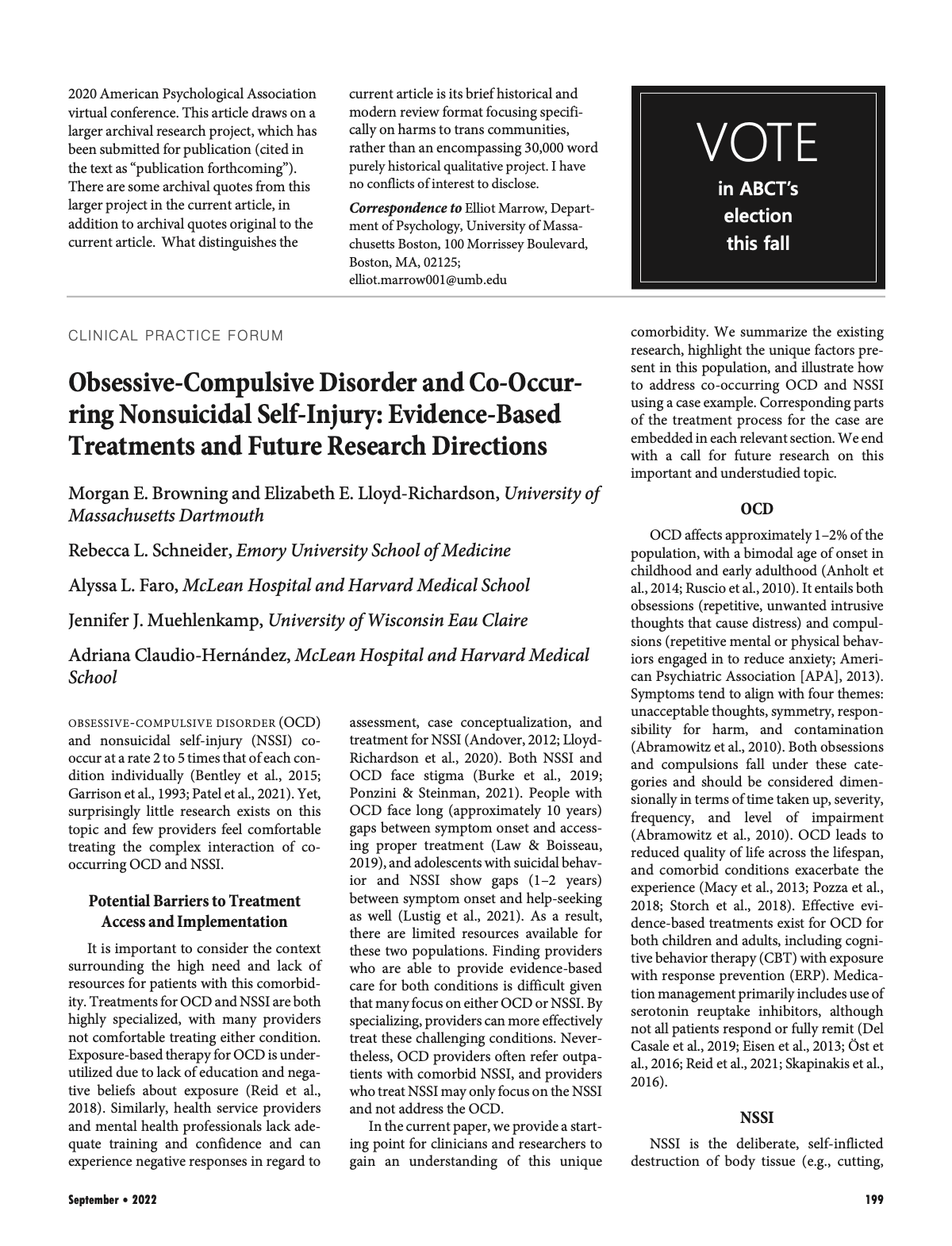
![Screenshot of an academic article titled 'Obsessive-Compulsive Disorder and Co-Occurring Nonsuicidal Self-Injury: Evidence-Based Treatments and Future Research Directions'.]()
Obsessive-Compulsive Disorder and Co-Occurring Nonsuicidal Self-Injury: Evidence-Based Treatments and Future Research Directions
-
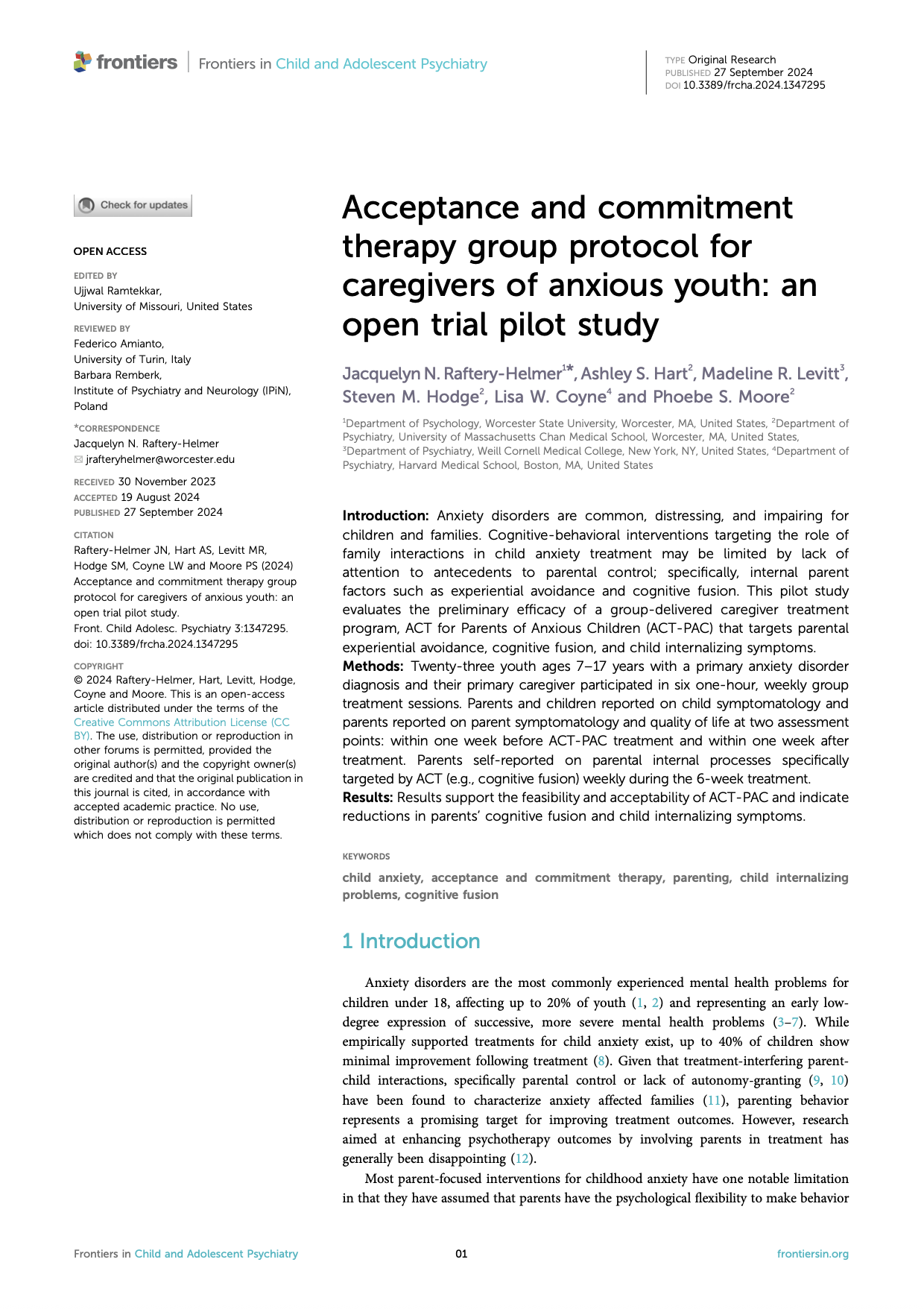
![Title page of a research article titled 'Acceptance and commitment therapy group protocol for caregivers of anxious youth: an open trial pilot study,' including author information, journal details, and introduction section.]()
Acceptance and commitment therapy group protocol for caregivers of anxious youth: an open trial pilot study
-
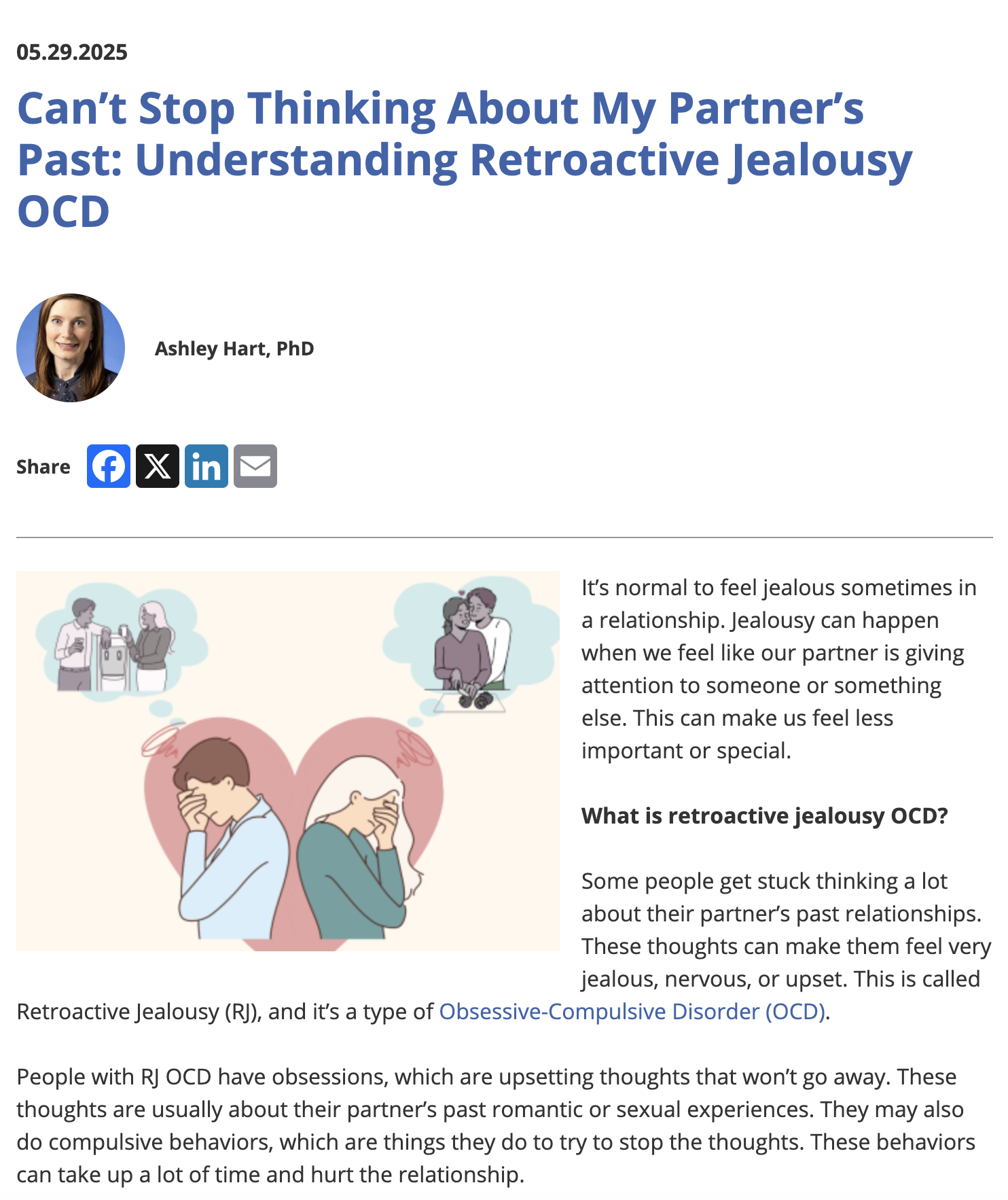
![Illustration of a woman and man, both appearing distressed, with thought bubbles showing scenarios of jealousy and couples giving attention to others, depicting emotional hurt from retroactive jealousy OCD.]()
Can’t Stop Thinking About My Partner’s Past: Understanding Retroactive Jealousy OCD
-
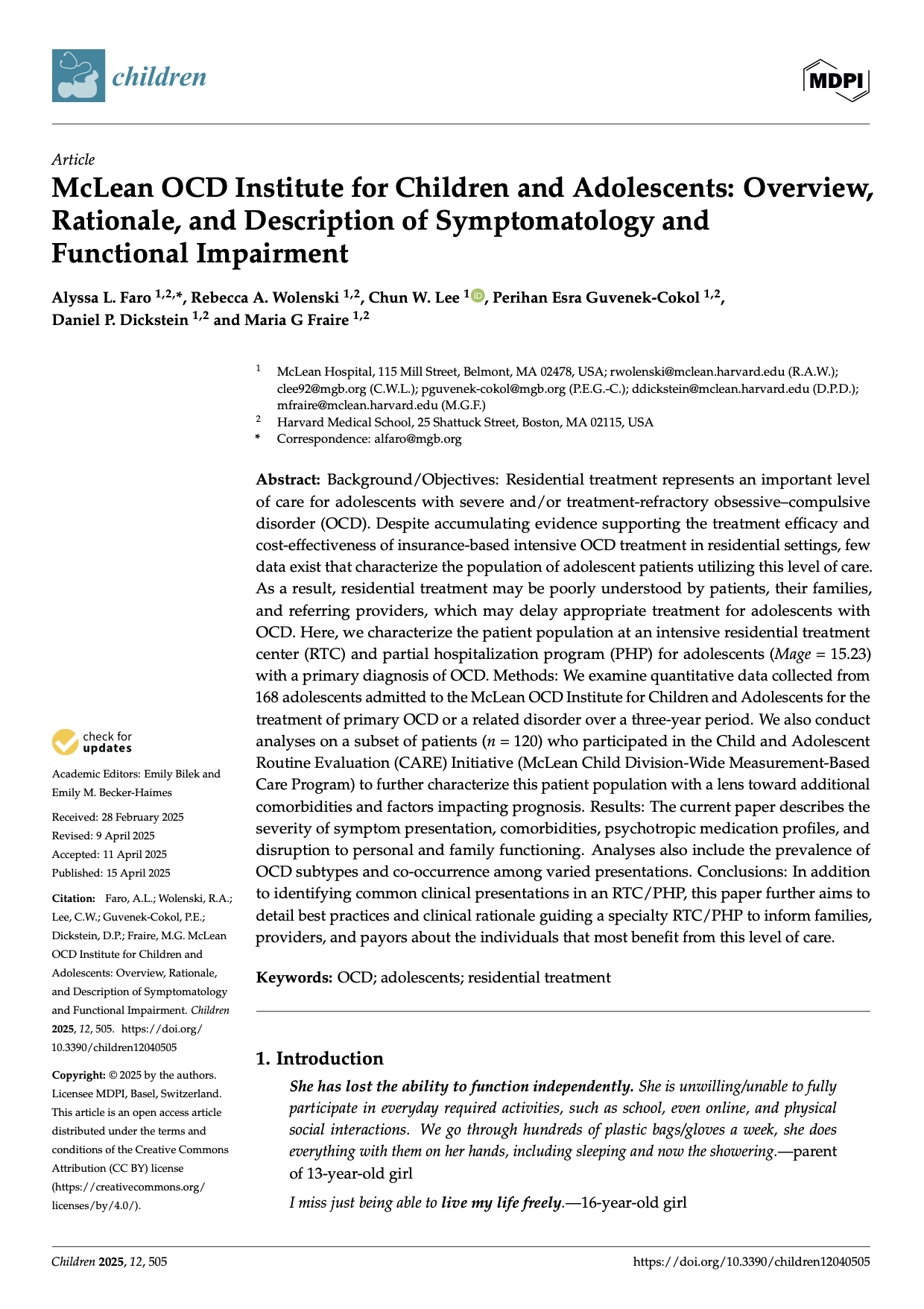
![Page from a scientific article titled "McLean OCD Institute for Children and Adolescents: Overview, Rationale, and Description of Symptomatology and Functional Impairment" with author information, abstract, and keywords. The page includes logos for MDPI, children, and McLean Hospital.]()
McLean OCD Institute for Children and Adolescents: Overview, Rationale, and Description of Symptomatology and Functional Impairment
-
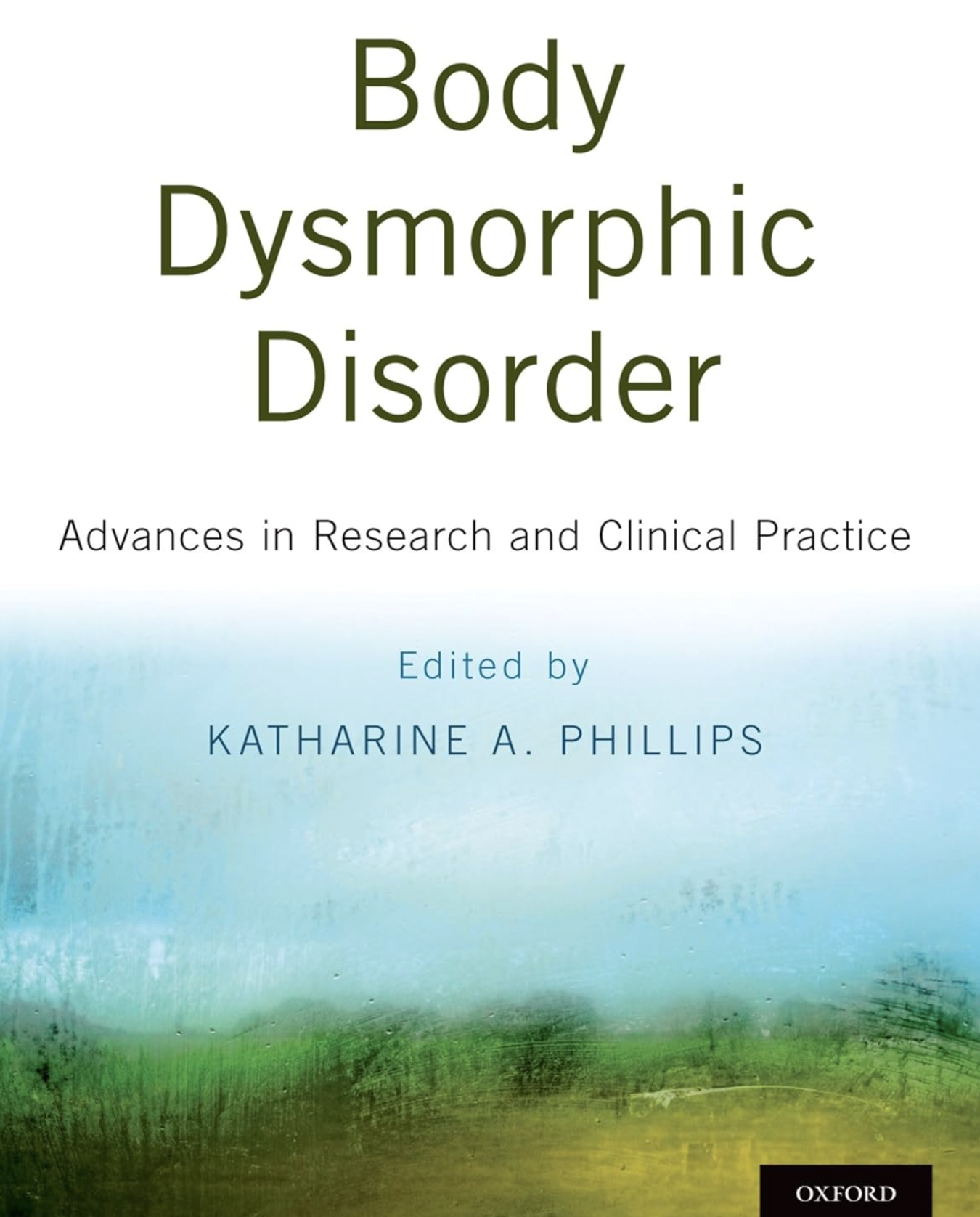
![Book cover titled 'Body Dysmorphic Disorder: Advances in Research and Clinical Practice,' edited by Katharine A. Phillips, published by Oxford.]()
Comorbidity and personality in body dysmorphic disorder. In: Body Dysmorphic Disorder: Advances in Research and Clinical Practice
-
![A webpage with a title about stopping intrusive thoughts, featuring a section with social media icons and an image of a groundhog holding a carrot with a speech bubble saying "WTF" and a black circle with white text that says "I FEEL...".]()
How to Stop Intrusive Thoughts From Ruining your Life
-
![Colorful abstract drawing of a tree with scribbles representing leaves and branches, and a small ladder at the bottom.]()
What’s the Difference Between Impulsive vs. Intrusive Thoughts?
-
![Screenshot of a webpage titled "Cosmetic Treatments and Body Dysmorphic Disorder" showing a video thumbnail of a woman with short blonde hair, wearing a blue patterned blouse, discussing her son's struggles with Body Dysmorphic Disorder (BDD).]()
Cosmetic treatments and body dysmorphic disorder
-
![An article titled "How to Tell If You're Ruminating - and How to Stop" by Lauren Del Turco, with social media sharing icons below. The image includes a bowl of tomato soup with a spoon and yellow pasta letters spelling "THAT WAS MESSED UP" floating in the soup, on a green and white checkered tablecloth.]()
How to Tell If You’re Ruminating—and How to Stop